PERMANENT MAGNET RECYCLING · BERLEVÅG, FINNMARK
New sintered magnets from end-of-life magnets.
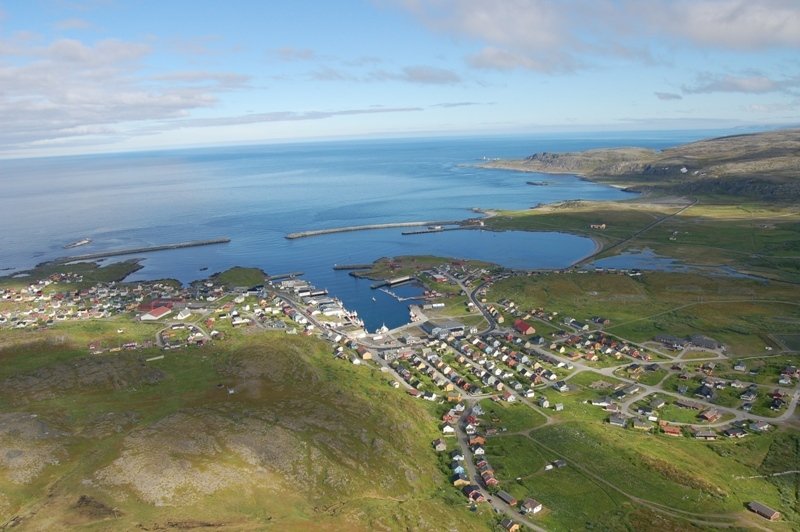
HydroMagnets AS is established to upcycle end-of-life permanent magnets from across Europe into new sintered NdFeB magnets. The process uses renewable hydrogen and renewable power. The plant is under development in Berlevåg, Finnmark, at 70.86° N.
- Feedstock
- End-of-life permanent magnets from European industry
- Process gas
- Renewable hydrogen, produced in Berlevåg by electrolysis
- Energy
- Renewable wind power from the Raggovidda wind farm
01 — CRITICAL RAW MATERIALS
Europe produces almost none of its own permanent magnets.
Sintered neodymium–iron–boron (NdFeB) magnets are the strongest permanent magnets in industrial use. They are required in electric-vehicle traction motors, wind turbine generators, marine propulsion systems and industrial servo motors.
European demand is growing. European supply is not. Mining, separation and metal production of rare earths are concentrated outside the EU, and recycling within the EU is below one per cent.
The EU Critical Raw Materials Act (2024) sets benchmarks for 2030: at least 10 % of annual consumption extracted in the EU, at least 40 % processed in the EU, and at least 25 % covered by recycling. No more than 65 % of any strategic raw material should originate from a single third country. For rare-earth permanent magnets, the EU today meets none of these benchmarks.
- ~98 %of the EU's supply of rare earth elements is sourced from China. (European Commission.)
- < 1 %of rare-earth elements in use in Europe are currently recycled. (European Commission, Joint Research Centre.)
- ~30 wt %of a sintered NdFeB magnet is rare-earth content (Nd, Pr, Dy, Tb). (Material composition, grade-dependent.)
- 1–2 kgof NdFeB magnet is used in a typical electric-vehicle traction motor. (European Commission, Joint Research Centre.)
- 400–650 kg/MWof NdFeB magnet is used in direct-drive wind turbine generators. (Published literature.)
02 — WHAT WE DO
Short-loop recycling. The alloy stays intact.
HydroMagnets is established to operate a short-loop process. End-of-life magnets are not dissolved and re-separated element by element. The NdFeB alloy is preserved, broken down by hydrogen, and re-sintered into new magnets.
The short loop avoids primary mining, chemical separation and rare-earth metal production entirely. The output is a finished magnet to specification rather than an intermediate chemical product.
The alloy is the product of a manufacturing chain that has already taken place. Mining, separation, metal production and alloying were done once, and the short loop keeps that work rather than undoing it.
The feedstock is European. Permanent magnets are recovered from end-of-life equipment across Europe. Material already placed on the European market is a source that requires no new mining and no import.
Material is tracked by batch, from the equipment it was recovered from to the magnet it becomes. The Critical Raw Materials Act will require producers to declare how much of the neodymium, praseodymium, dysprosium and terbium in a magnet was recovered from post-consumer waste. That declaration depends on records kept from the start.
- 01
Collection and grading
End-of-life magnets will be sourced from European industry and sorted by alloy grade. Material is tracked by batch.
- 02
Hydrogen decrepitation
Renewable hydrogen reacts with the alloy at moderate temperature and pressure. The material fractures along grain boundaries into a friable powder.
- 03
Milling
The powder is milled to a fine particle size under a protective atmosphere.
- 04
Alignment and pressing
The powder is aligned in a magnetic field and compacted into blocks.
- 05
Sintering and heat treatment
Blocks are sintered under vacuum and heat-treated to set coercivity.
- 06
Finishing
Machining to drawing, Ni–Cu–Ni or epoxy coating, magnetisation and measurement.
03 — LOCATION
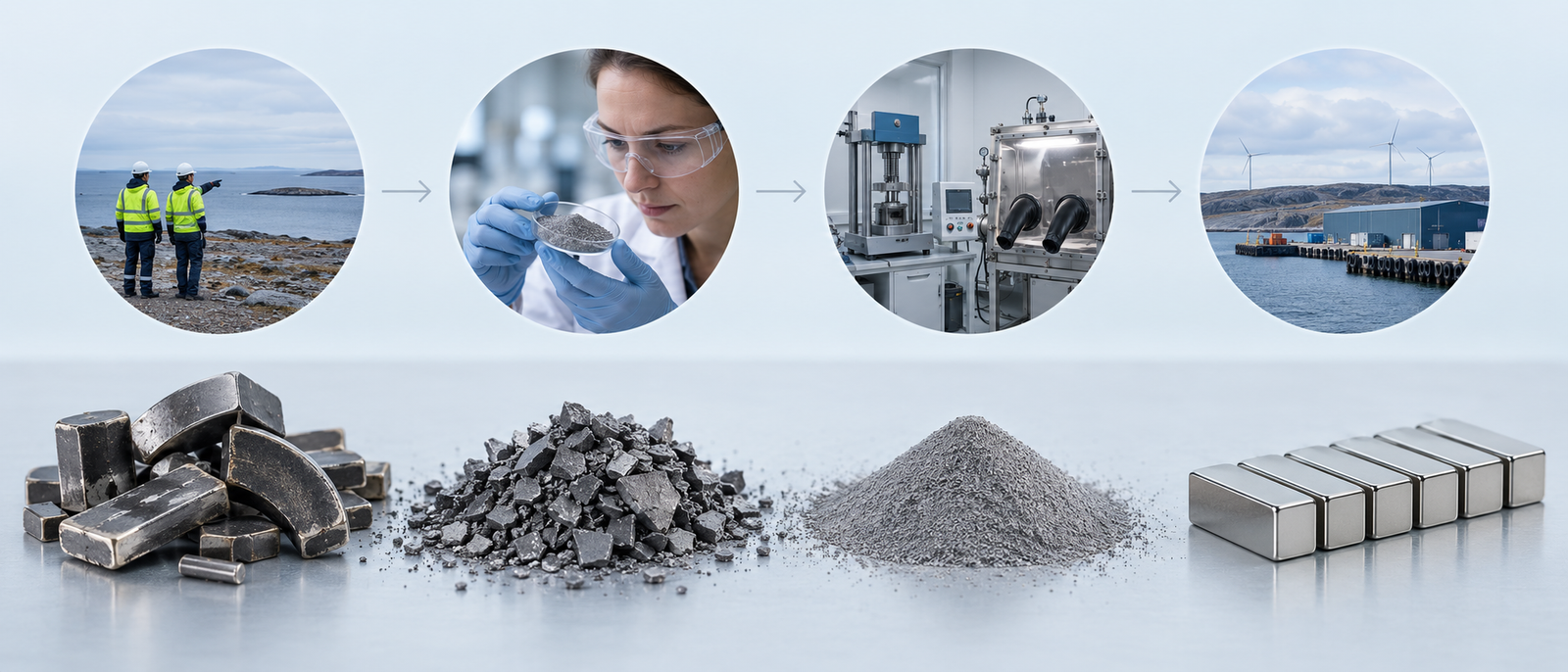
Berlevåg, Finnmark. 70.86° N.
Berlevåg is a fishing and maritime municipality on the Barents Sea coast of Finnmark. The town has a recently extended industrial harbour, its own airport, available industrial land near the quay, and a workforce with maritime and technical trades.
The location was chosen for three reasons: direct access to some of the most productive onshore wind resources in Europe, a deep-water harbour for inbound scrap and outbound product, and a regional power surplus.
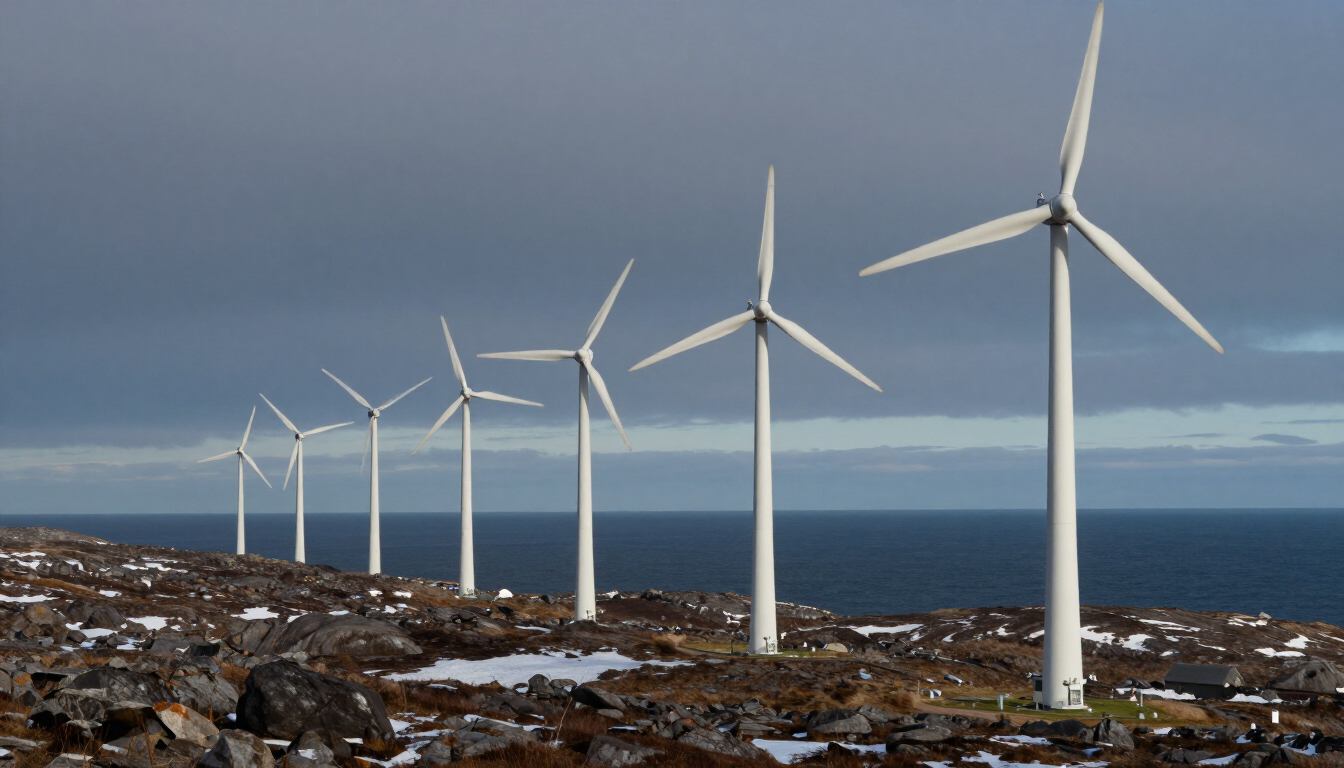
Raggovidda produced 405 GWh in a year from 96.6 MW of installed capacity — a capacity factor close to 48 %, roughly twice the European average for onshore wind. The harbour has recently been extended and the town retains scheduled air connections: infrastructure here is being added to rather than wound down.
- Coordinates
- 70.86° N, 29.09° E
- Harbour
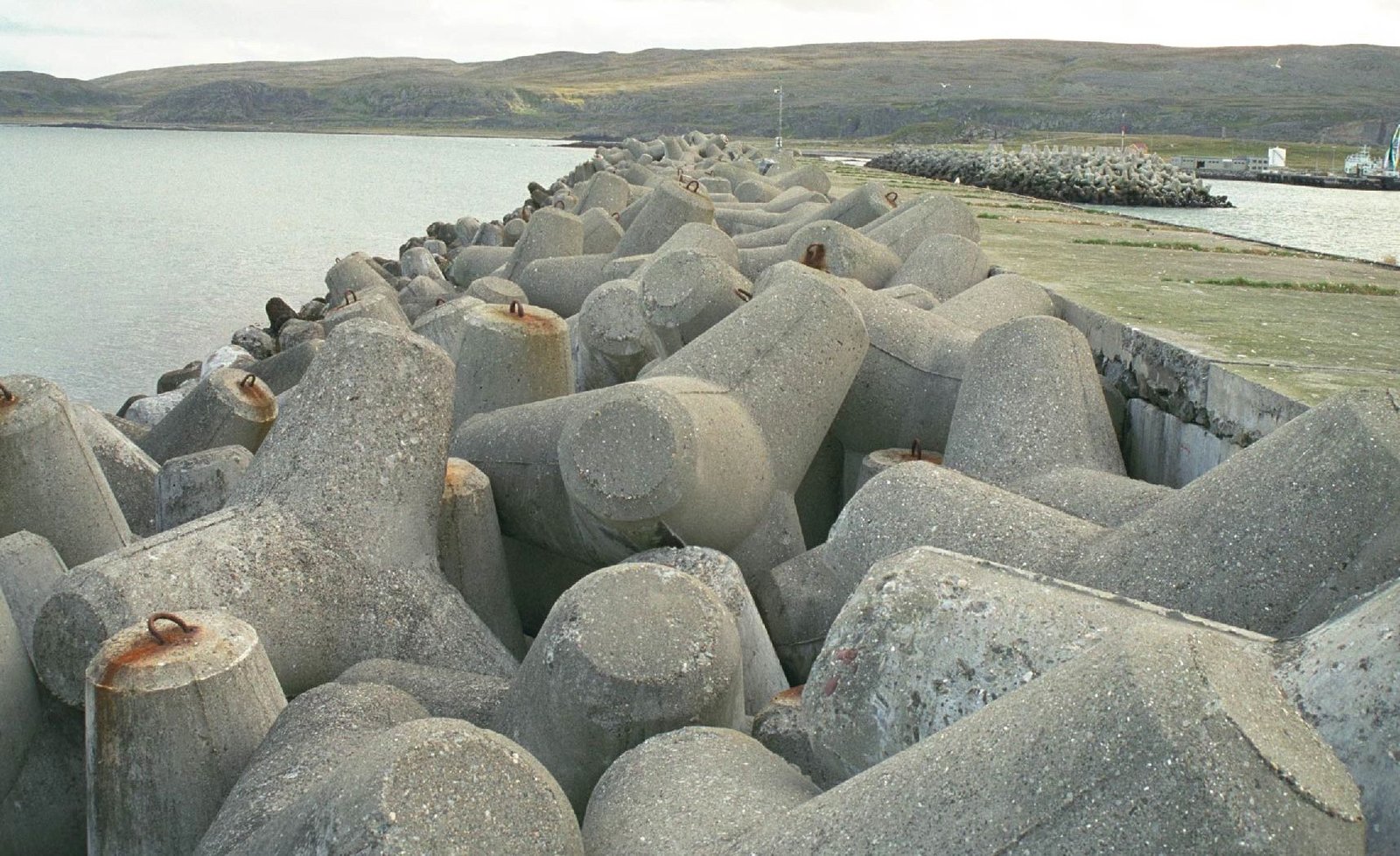
- Sheltered deep-water harbour behind two breakwaters, recently extended; quay capacity for bulk and project cargo
- Power
- Raggovidda wind farm — 96.6 MW installed, 405 GWh per year — on the plateau approximately 10 km south of the town
- Air
- Berlevåg airport, with scheduled regional connections
- Road
- County road connection to the E6
04 — RENEWABLE HYDROGEN
Hydrogen from wind power, produced where the power is.
Berlevåg has more renewable electricity than the grid can carry away. Varanger Kraft holds a 200 MW concession at Raggovidda, but transmission capacity out of the Varanger peninsula has been limited to 95 MW. Hydrogen was introduced as a way of storing energy generated when the wind blows and the grid is full.
The hydrogen plant in Berlevåg is a 2.5 MW PEM electrolyser with a production capacity of one tonne of hydrogen per day. It has been in operation since 2020 and was built under Haeolus, an EU Horizon 2020 project under the Fuel Cells and Hydrogen Joint Undertaking, coordinated by SINTEF. The project demonstrated hydrogen production from wind power at a remote northern site with constrained grid access.
Hydrogen is produced by electrolysis of water using renewable wind electricity. The feedstock is water and the by-product is oxygen.
For HydroMagnets the hydrogen is a process gas. It is consumed in the reaction that breaks down the magnet alloy, and is removed before the material is consolidated. The heat for sintering comes from renewable electricity.
05 — OWNERSHIP
Founded by three European companies.
HydroMagnets AS is a Norwegian private limited company (aksjeselskap), founded in August 2026 by three companies working on different parts of the same problem.
Ophiolite AS (Norway) — Main industrial investor and funder. Ophiolite works on upcycling of critical raw materials in the battery and permanent magnet industries.
Phoenix Surowce Sp. z o.o. (Poland) — Robotic disassembly and AI-based sorting of end-of-life electronic equipment.
BEIA Consult International (Romania) — Data architecture, industrial software and analytics.
The share register is maintained in accordance with the Norwegian Private Limited Liability Companies Act. Annual accounts are filed with the Register of Company Accounts at the Brønnøysund Register Centre and are publicly available.
06 — DEVELOPMENT STATUS
A staged development. No investment decision has been taken.
HydroMagnets AS is currently exploring the opportunity to develop a production site in Berlevåg and to become part of Berlevåg Industripark.
No decision has been taken to establish a factory. The development follows four stages, and each must be completed successfully before the next is committed.
A magnet plant is a process industry. The work it requires is year-round rather than seasonal, and skilled: process operators, laboratory technicians, mechanical and electrical maintenance, quality measurement and logistics. The greater Varanger region, and Vestre Varanger in particular — Berlevåg, Båtsfjord, Nesseby and Tana — has a workforce with maritime, fisheries and technical trades. Much of that competence transfers to process operation, gas and vacuum systems and precision maintenance. A plant in Berlevåg would draw on labour, suppliers and services from across the region rather than from one municipality alone.
Other competence would have to be built here. Magnet metallurgy, powder handling and magnetic measurement are not trades that exist in the region today, and establishing them locally rather than importing them is one of the things the staged development is intended to test — together with use of the harbour, the industrial park and regional suppliers. In an economy that is largely seasonal, year-round industrial employment would broaden the base rather than replace it.
- 01
Pre-study
Technical, commercial and site assessment, establishing whether the concept is viable at this location and at what scale.
- 02
Research and development
A publicly funded research and development project to validate the regeneration route and qualify recycled feedstock against commercial magnet grades.
- 03
Pilot line
Production at pilot scale, to demonstrate the process under production-representative conditions and to establish cost.
- 04
Investment decision
Taken only if the preceding stages meet their objectives.
Statements on this website describing production, processes, capacity or facilities refer to plans under development and not to existing operations. HydroMagnets AS has no production facility in operation.
07 — REGISTRATION AND CONTACT
Company registration details.
- COMPANY
- HydroMagnets AS
- LEGAL FORM
- Aksjeselskap (AS)
- ORG. NO.
- 938 407 975
- REGISTERED
- Enhetsregisteret, Brønnøysund Register Centre
- MUNICIPALITY
- 5630 Berlevåg, Norway
For technical enquiries, feedstock supply, off-take or funding dialogue, use the form.